امنیت، هویت، استقرار و تابآوری · فصل ۹ — Resource، Provider، Cost و Organizational Failure · 125
Main Workstation Interference
Diagnose main-workstation interference from per-workload CPU/memory pressure, host responsiveness and limit events; distinguish workload saturation from host-wide contention; apply bounded resource isolation or scheduling; and prove that the foreground workflow remains responsive under a changed background load. میتواند failure family «Main Workstation Interference» را بازتولید/تشخیص دهد و detection، containment و recovery مناسب را تعیین کند.
Lesson summary
Diagnose main-workstation interference from per-workload CPU/memory pressure, host responsiveness and limit events; distinguish workload saturation from host-wide contention; apply bounded resource isolation or scheduling; and prove that the foreground workflow remains responsive under a changed background load.
میتواند failure family «Main Workstation Interference» را بازتولید/تشخیص دهد و detection، containment و recovery مناسب را تعیین کند.
This lesson produces
میتواند failure family «Main Workstation Interference» را بازتولید/تشخیص دهد و detection، containment و recovery مناسب را تعیین کند.
Who it is for
Foundation
Use a guided boundary matrix and one explicit ambiguity repair.
Repair
Re-run only the failed evidence dimension with a smaller deterministic synthetic case.
Experienced
Start from mixed evidence; require competing explanations, negative evidence and transfer.
Prerequisites
1. A slow workstation does not prove the cause
When an editor, terminal, or browser becomes sluggish, do not jump directly to hardware or OS failure. This lesson owns the case where a background build, container, indexing task, or model job measurably harms an interactive foreground workflow through CPU, memory, or I/O contention. Diagnose from per-workload evidence and responsiveness, not from a vague report of slowness.
2. Measure foreground and background separately
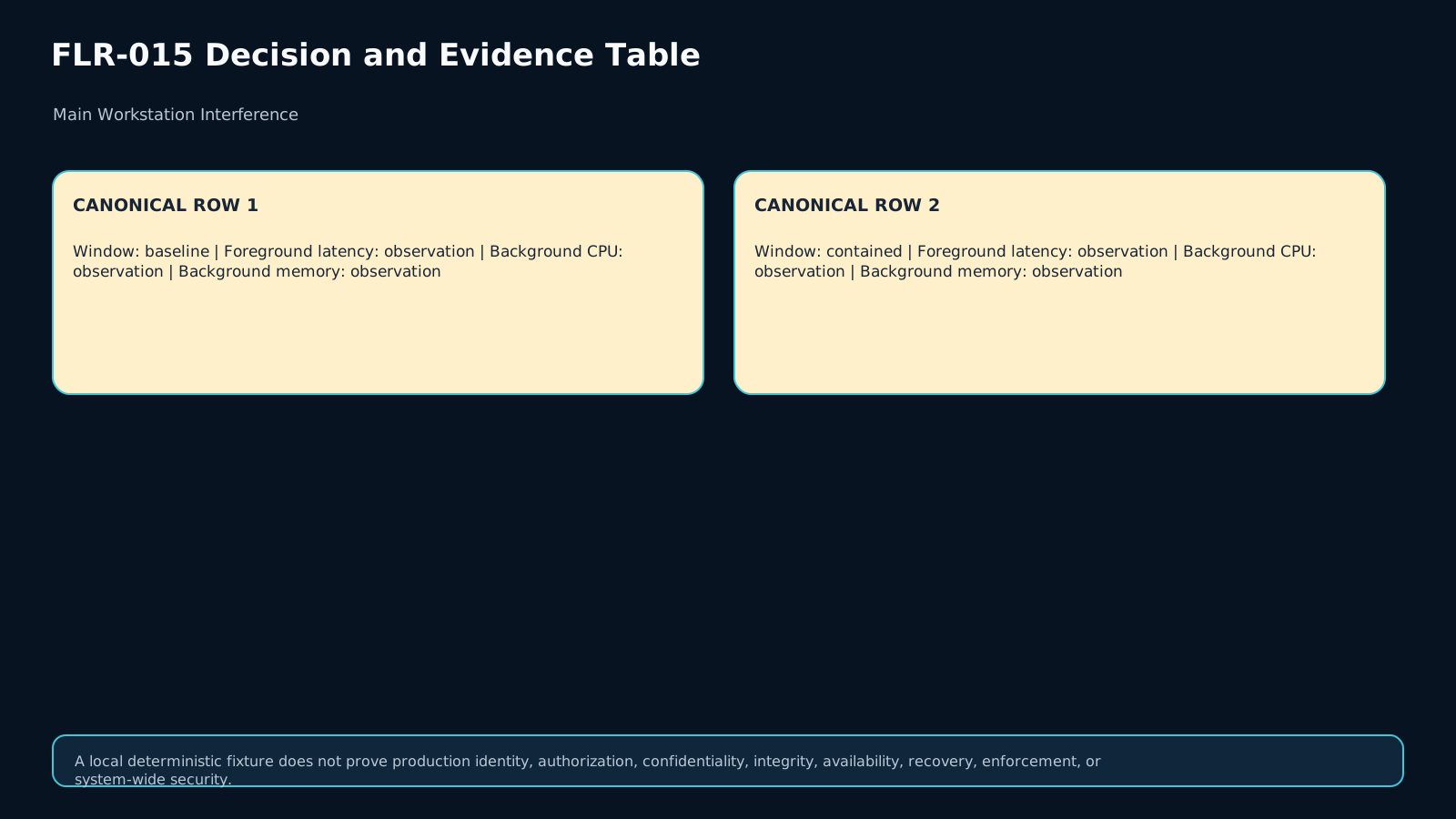
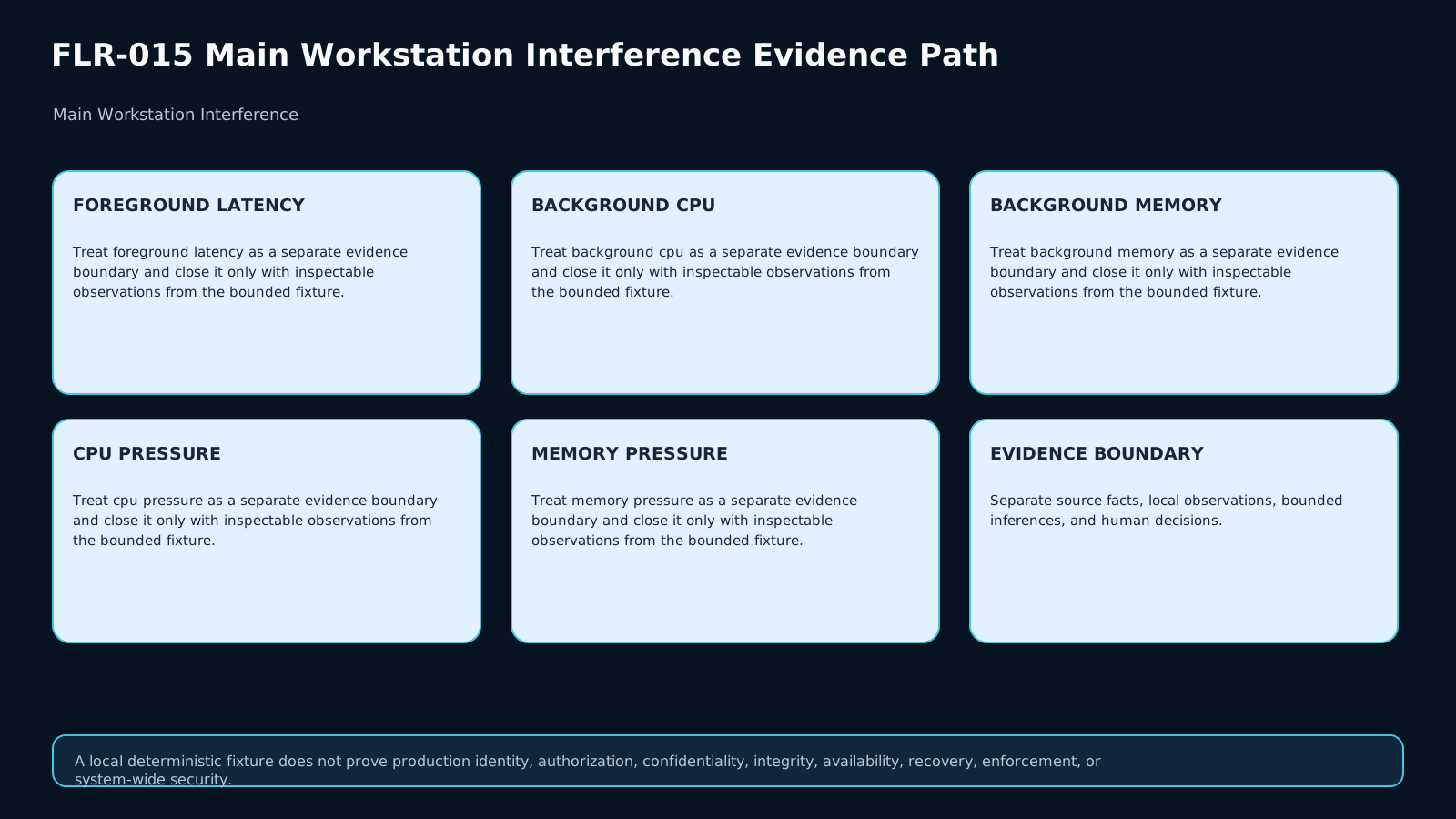
The foreground is the workflow whose responsiveness matters to the user; the background is the workload that can consume resources without being directly interactive. For each time window, record foreground latency next to background CPU, memory, and pressure evidence. Host-wide utilization alone is weak attribution evidence.
3. A container boundary is not resource isolation
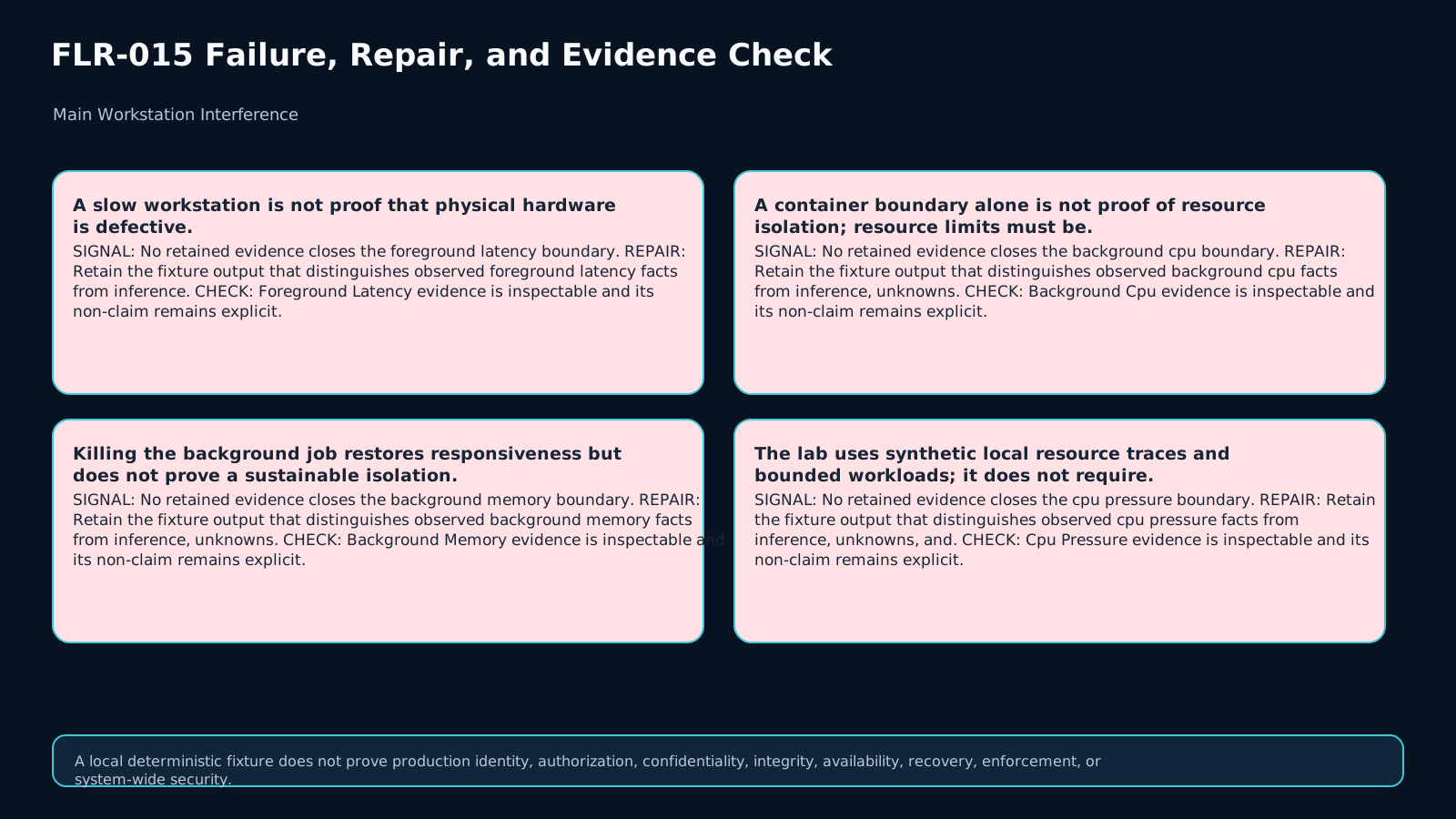
Docker containers have no hard resource constraints by default and can consume host CPU or memory as allowed by the kernel scheduler. “It is in a container” is therefore not proof of isolation. Configure an explicit CPU or memory boundary and observe its effect before claiming containment.
4. Do not equate CPU saturation with interference
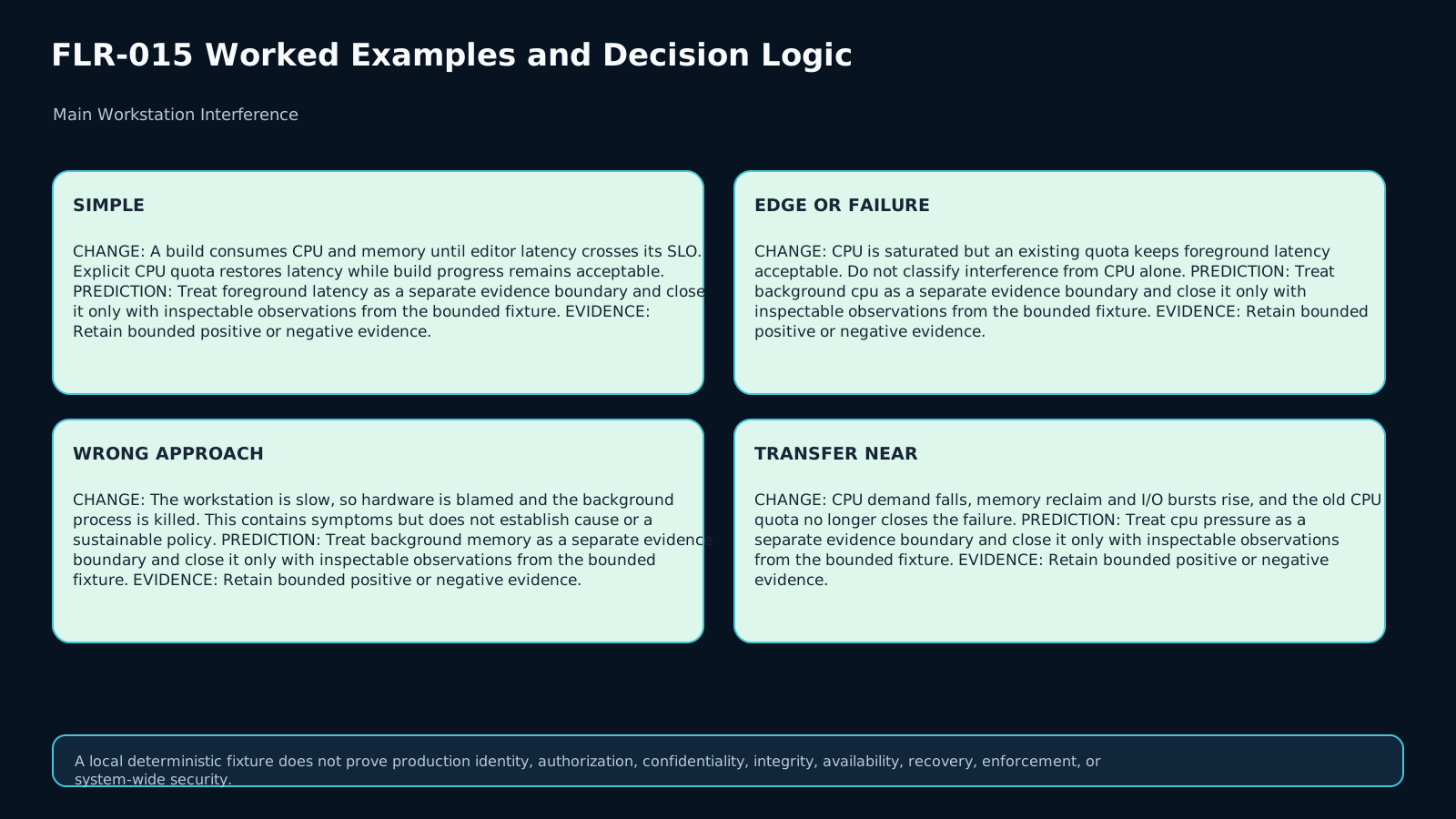
High CPU can be healthy. If foreground latency stays within its SLO and background progress remains acceptable, 95% CPU alone is not a failure. CPU_INTERFERENCE needs a responsiveness violation plus CPU pressure or contention evidence that fits the observed behavior.
5. Memory pressure semantics matter more than raw usage
In cgroup v2, memory.high is a reclaim/throttling boundary and memory.max is a harder final limit. High memory use without pressure is not automatically a failure. High latency combined with reclaim pressure or a memory-limit event can support MEMORY_INTERFERENCE; keep that evidence distinct from CPU evidence.
6. I/O bursts can change the diagnosis
A workload can use modest CPU yet stall an interactive workflow through writes, indexing, swap, or reclaim I/O. If the transfer fixture lowers CPU while I/O pressure rises, simply reusing the old CPU quota is overfitting. Rebuild the dominant-pressure decision from the new evidence.
7. A limit event is not the whole root cause
Throttling, a memory-high event, or even an OOM event is important observation, but it is not complete causal proof by itself. Compare foreground latency, pressure, and background progress before and after the event. A limit can contain a workload while still representing a poor policy.
8. Workstation Resource Isolation & Responsiveness Record v1
The owned artifact tracks foreground latency, background CPU, background memory, CPU/memory/I/O pressure, limit configuration, throttle/OOM events, background progress, host responsiveness, a negative control, and closure replay. Every decisive field is observation, authority, inference, or explicit UNKNOWN.
9. Isolation policy must be bounded
A good policy does more than keep the workstation responsive; it must preserve a declared minimum of background progress. If an overly strict limit fixes editor latency while effectively starving the build, closure is invalid and the state remains OVERCONSTRAINED or REPAIR_POLICY.
10. Negative control defeats one-signal diagnosis
One fixture deliberately drives CPU high while an active quota keeps foreground latency below the SLO. The correct conclusion is not “high CPU means interference.” Classification requires joint evidence: a latency violation, compatible pressure/limit evidence, and a meaningful response to mitigation.
11. Containment is not closure
Killing a background process can immediately restore responsiveness, but that is containment. Closure requires replaying the same workload, or a bounded equivalent, under an explicit policy and showing that both foreground SLO and background progress remain acceptable without the failure returning.
12. Lab classifications
The lab uses NO_FOREGROUND_INTERFERENCE, CPU_INTERFERENCE, MEMORY_INTERFERENCE, IO_INTERFERENCE, MIXED_INTERFERENCE, and INTERFERENCE_UNRESOLVED. If the foreground SLO is not violated, high resource use alone does not open the failure. If latency is violated but pressure evidence is insufficient, keep the diagnosis unresolved.
13. The closure oracle has two primary gates
After a policy change, the evaluator checks at minimum that post_limit_foreground_latency <= SLO and post_limit_background_progress >= declared minimum. It also rejects a new OOM event. This prevents a mitigation that helps only one side of the system from receiving PASS.
14. Lab: eight fixtures and 64 assertions
Eight deterministic fixtures cover a healthy baseline, CPU interference, a CPU-high negative control, memory-pressure failure, I/O transfer failure, mixed pressure, an over-constrained policy, and successful closure. The evaluator emits eight fields per case, giving exactly 64 administrative assertions.
15. Exit checklist and transfer
Before exit, identify the foreground SLO, the background resource evidence, the dominant pressure, the chosen containment, the minimum background-progress bound, and the independent replay that proves closure. In transfer, CPU demand falls while memory reclaim and I/O bursts rise; rebuild the policy from fresh evidence rather than copying the prior answer.
Assessment
There is no answer key in this lesson pack; answer it yourself and mark honestly. "Needs review" sends the lesson to your review queue.
Q1 retrieval
Why does putting a heavy task in a container not automatically isolate the workstation?
Q2 application
Background CPU is 96% but foreground latency remains under the SLO. Is this CPU interference?
Q3 diagnosis
Foreground latency is high, CPU demand is moderate, memory pressure is high and reclaim events occur. Which boundary should be investigated first?
Q4 decision
A strict limit restores foreground latency but background progress falls below its declared minimum. Is closure achieved?
Q5 transfer
The transfer fixture lowers CPU but adds memory reclaim and I/O bursts. What must change?
Assessment rubric
A sufficient response must preserve the owned failure boundary and use evidence rather than a single utilization signal.
- Boundary and attribution — critical: distinguishes foreground responsiveness from background workload resource evidence.
- Pressure discrimination — critical: separates CPU, memory and I/O pressure and keeps unsupported cause claims OPEN.
- Bounded containment — critical: chooses explicit resource limits or scheduling rather than relying on container presence or process termination alone.
- Closure — critical: foreground latency meets its SLO, background progress meets its minimum, and no new OOM failure appears under replay.
- Transfer — critical: changed-context policy is rebuilt from new evidence rather than copied from the baseline.
Any missing critical dimension is insufficient even if the prose is confident.
References & freshness
Case studies
Lesson visuals
Lab files
Use only the supplied synthetic fixtures. Implement evaluate(case) in starter.py so that classification follows foreground latency plus per-workload CPU/memory/I/O pressure evidence rather than raw utilization alone.
Your result must expose eight fields: classification, latency_state, dominant_pressure, containment, closure_state, host_responsiveness, background_progress_state, and next_action.
The fixture set includes a high-CPU negative control, a changed-context memory/I/O case, an over-constrained policy, and successful closure. Do not run destructive stress tests on a real workstation.
Lesson media & slides
Teaching files (download)